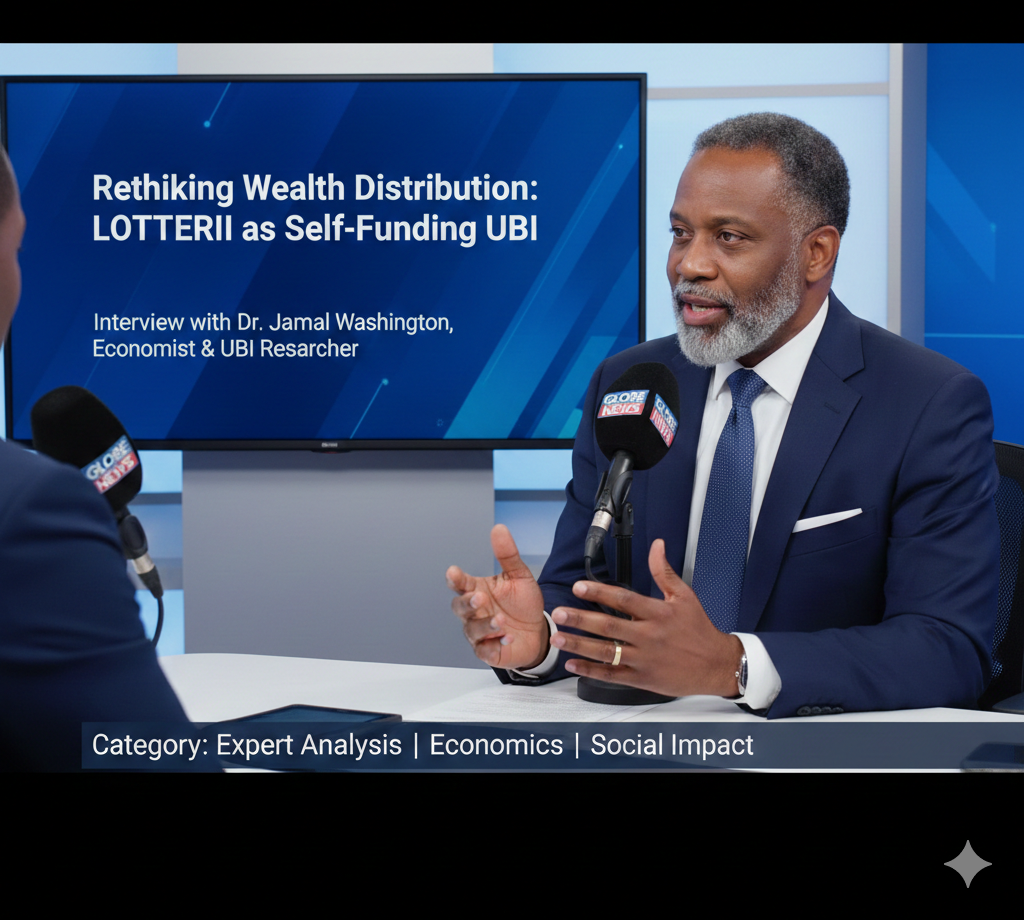
Sarah Kim has been a Certified Financial Planner for 15 years, managing over $300M in client assets. When clients started asking about LOTTERII, she expected to dismiss it as gambling. Instead, she found herself recommending allocation strategies. Here’s why.
———
LOTTERII: Sarah, financial advisors typically warn clients away from lotteries. You’re different. Why?
Sarah: Because LOTTERII is fundamentally different from traditional lotteries. When I ran the numbers, I couldn’t justify telling clients to avoid it completely.
Look, I still tell clients: don’t spend money you can’t afford to lose. Don’t replace your 401(k) with lottery entries. But as a small percentage of an entertainment budget? The mathematics actually make sense.
What convinced you?
Three things. First, the SPARK methodology has a 73% win rate. Even if you’re just winning your money back or small amounts, that’s dramatically different from traditional lotteries where you lose 100% of the time except for maybe 5-10% of plays.
Second, the TITAN odds of 1 in 2,187 for a million dollars. I’ve had clients buy individual stocks with worse expected value than that.
Third, blockchain transparency. I can verify every winner. I can audit the reserve pools. I can’t do that with state lotteries.
How do you advise clients to approach LOTTERII?
I recommend a tiered budget approach:
For clients earning under $75K: Maybe $25-50/month, primarily SPARK. Think of it as entertainment budget, not investment.
For clients earning $75K-150K: $50-100/month. SPARK for consistency, occasional TITAN plays.
For clients earning $150K+: $100-200/month. Mix across all tiers based on goals.
Key rule: never more than 1-2% of gross income, and never money that should go to retirement or emergency savings.
Have any clients actually won?
Yes. Three SPARK winners ($25K, $15K, $18K). One TITAN winner – $1.1M. That client came to me immediately for tax planning and wealth preservation strategies.
The TITAN winner was a teacher earning $62K a year. After taxes, she cleared about $780K. We put $400K in diversified index funds, $200K in high-yield savings for emergency reserves, paid off $80K in student loans, and left $100K liquid for quality of life improvements.
That teacher is now financially independent at age 41. That’s life-changing.
What about the tax implications?
LOTTERII winnings are taxable income, just like traditional lottery wins. Federal taxes apply. State taxes depend on where you live.
For big wins – TITAN and above – I immediately recommend:
- Set aside 40-45% for taxes before spending anything
- Consult a CPA and financial advisor within 48 hours
- Develop a written plan for the money before touching it
- Resist lifestyle inflation for at least 6 months
How does LOTTERII fit into overall financial planning?
I think of it as part of the ‘asymmetric opportunity’ category. Small downside, massive upside.
If a client spends $50/month for a year ($600 total) playing SPARK and TITAN, the worst case is they lose most of that $600. Financially painful but not devastating for someone following our budgeting advice.
Best case? They hit TITAN and win a million. That’s a 1,667x return. Show me an index fund with that potential.
What about LEGEND and BEAST?
Those are for clients who’ve already hit TITAN or have significant disposable income. I don’t recommend someone earning $60K chasing BEAST at $15 per entry.
But for a TITAN winner with $800K post-tax? Sure, allocate $100-200/month to hunt LEGEND. You’re already financially secure. Now you’re playing for generational wealth.
Final advice for people considering LOTTERII?
Start with SPARK. $3 per entry. Play 20-30 times. Track your results in a spreadsheet. See the 73% win rate for yourself.
If the mathematics hold up – which my analysis suggests they will – then decide if you want to allocate a small percentage of your entertainment budget to it.
But never, ever sacrifice retirement savings, emergency funds, or debt payoff for lottery plays. Financial fundamentals first. Asymmetric opportunities second.
That said, if the mathematics are real – and they appear to be – this is the first lottery I’ve ever seen that might actually belong in a balanced financial life.